Let's Teardown a Forty Quid Managed Switch
Last week the "SODOLA 6 Port 2.5Gb Web Managed Switch, 4 x 2.5G Base-T & 2 x 10G SFP+" showed up on my recommendation feed for less than £40. A managed switch with multi-gig ports, for that cheap, was begging for a teardown!
Once it arrived, a quick scan of the labels revealed I'd received an SL902-SWTGW124AS.
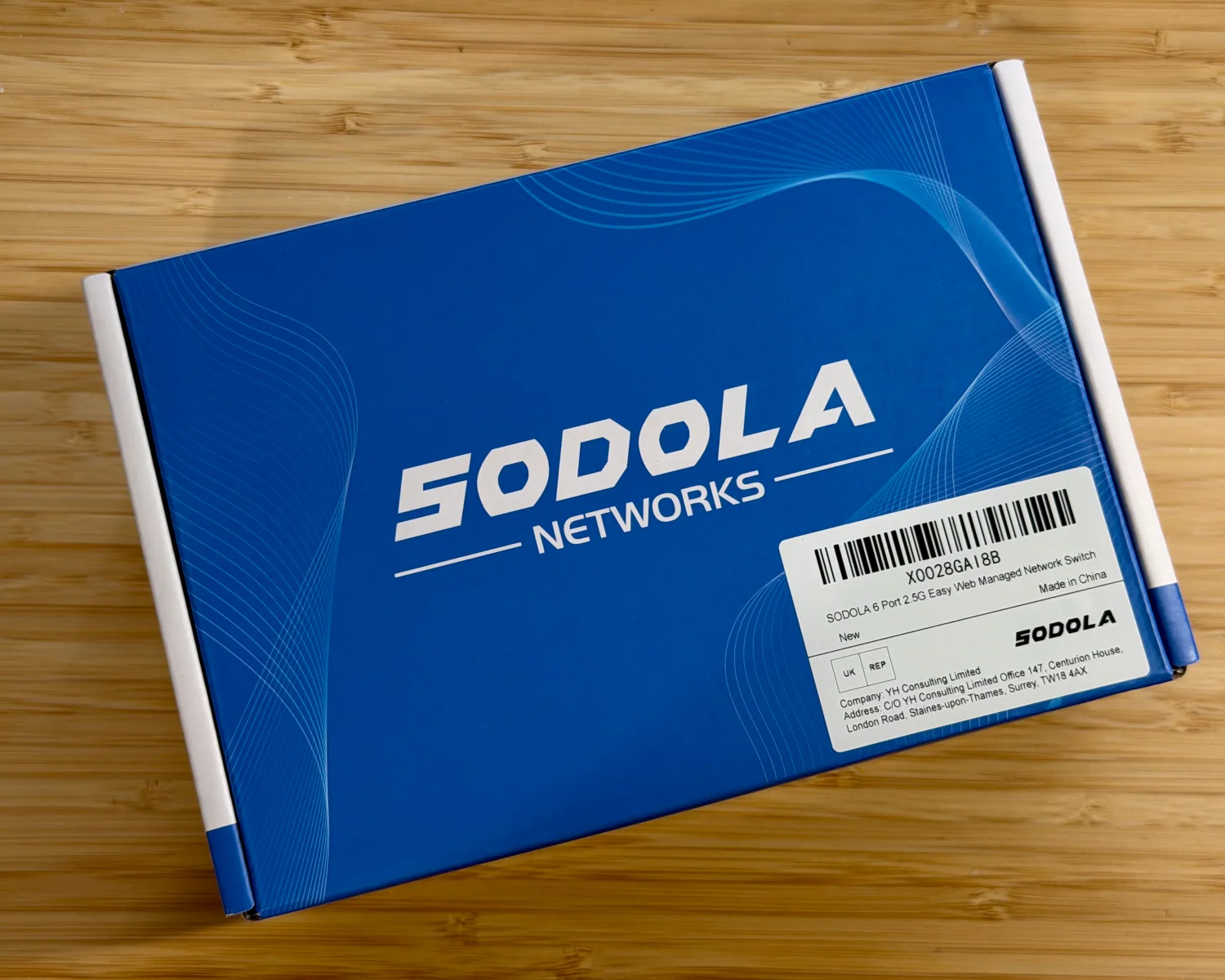
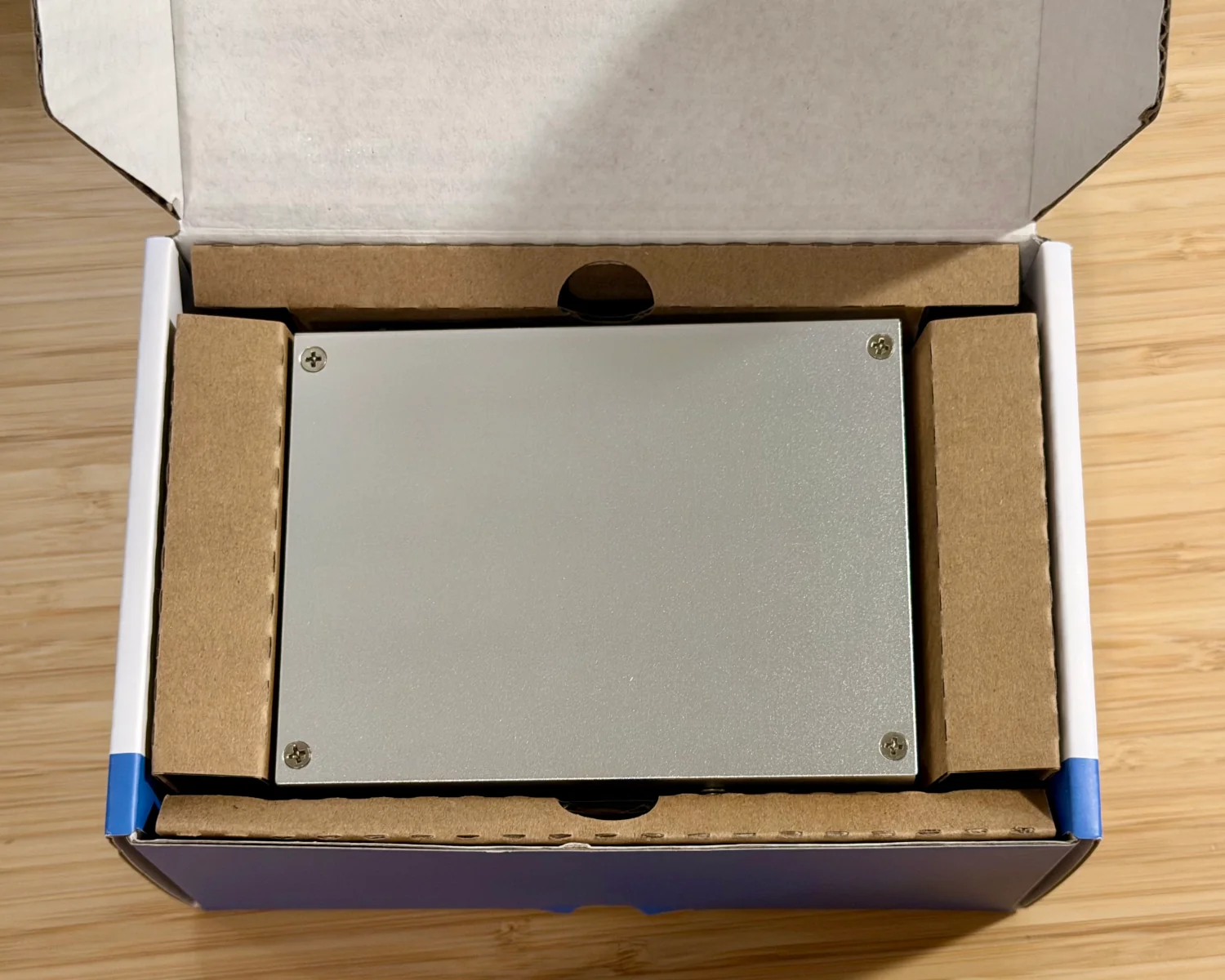
I was initially shocked that the switch wasn't better packaged, but I suppose for the delivered cost I shouldn't be surprised. Cutting corners on things like antistatic bags is probably to be expected when you're not a large, "San Francisco" founded, networking company.
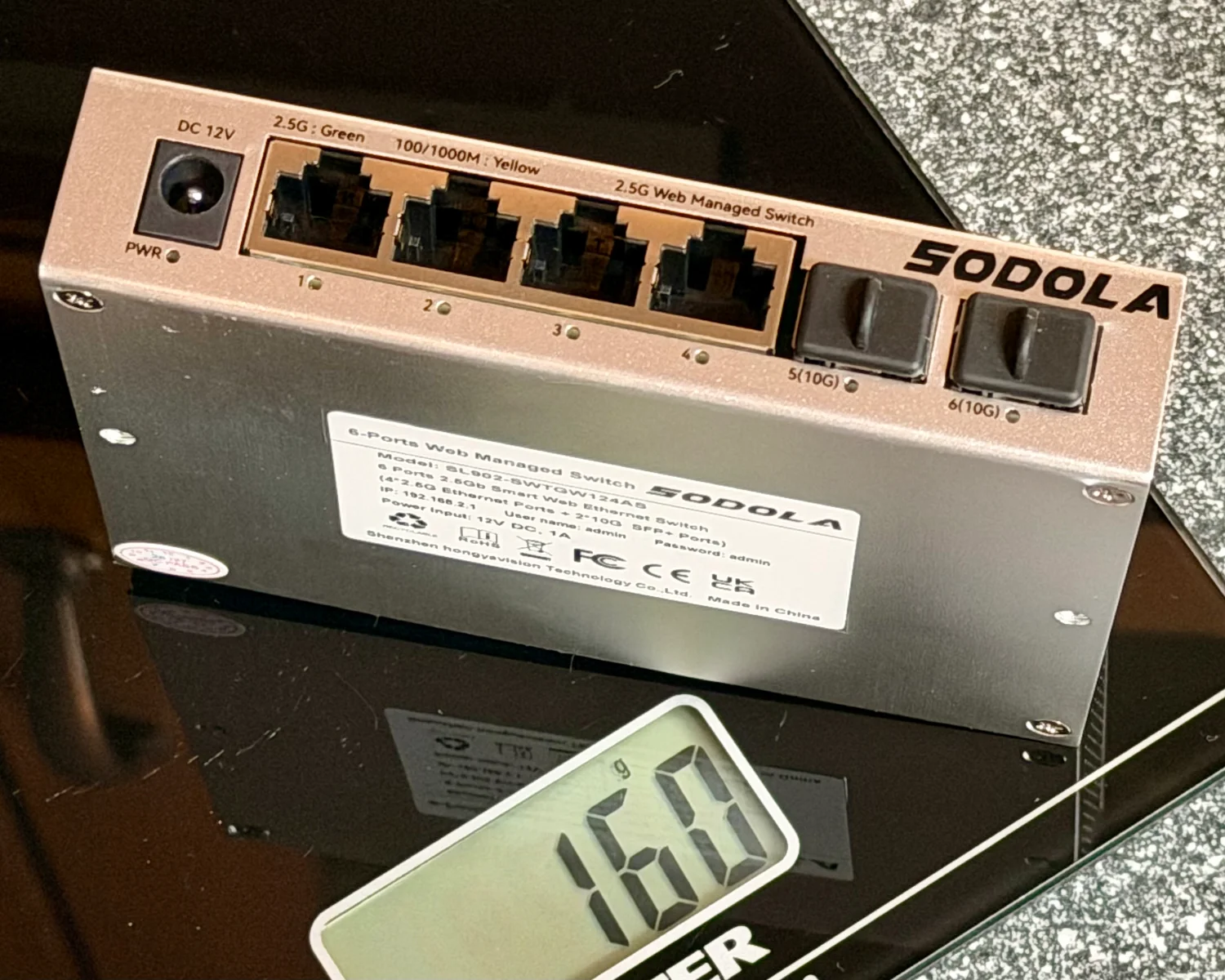
Taking the switch from the box made me pause; it felt unreasonably light. I popped it on the scales, and even with its folded aluminium case, it only weighed 160 g. It was time to crack it open and see what was, or wasn't, in there.
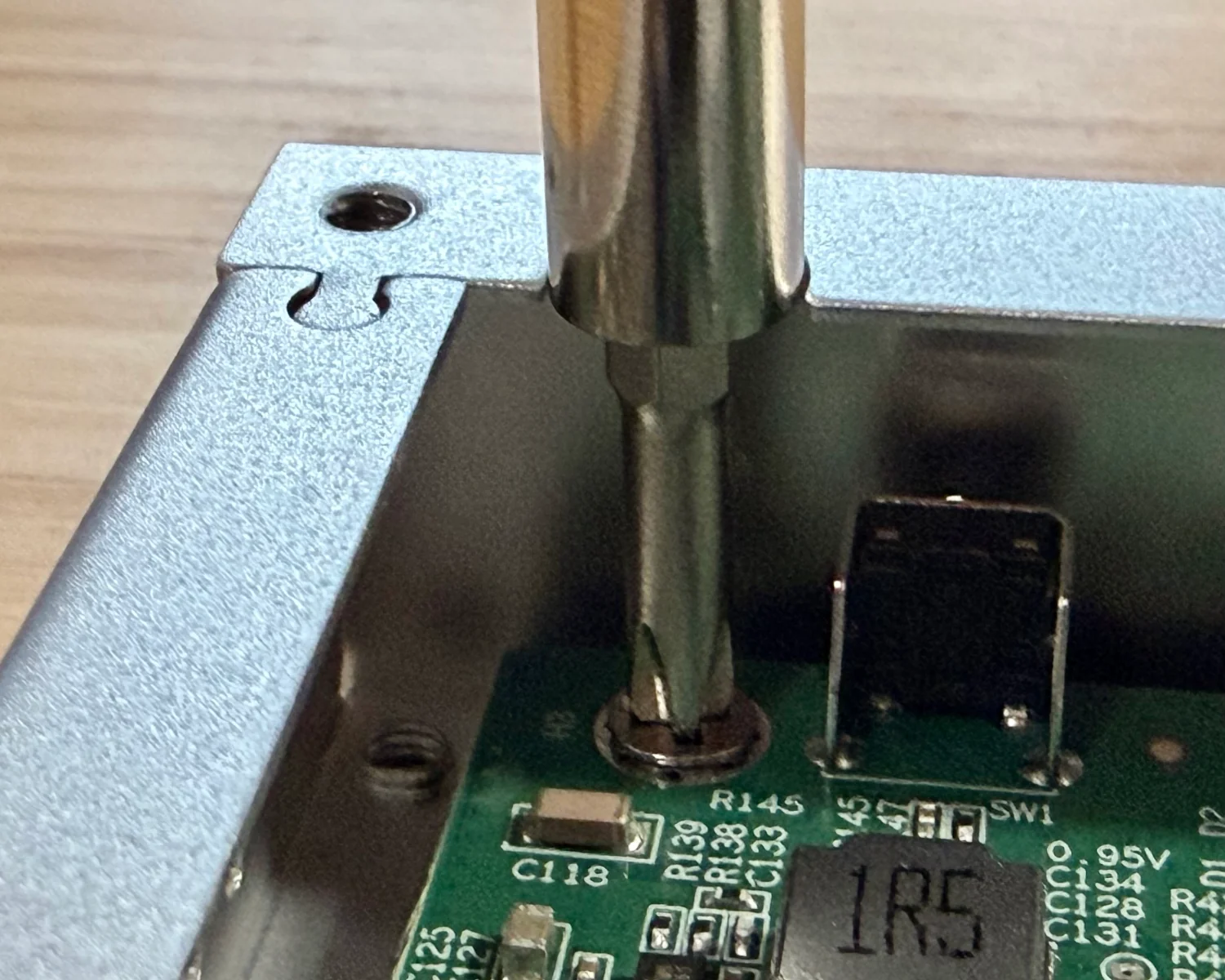
It was a tight squeeze, but the holes in the case are just wide enough for a changeable-tip screwdriver to fit.
Popping the case off and taking the board out lets us see all the gory details.
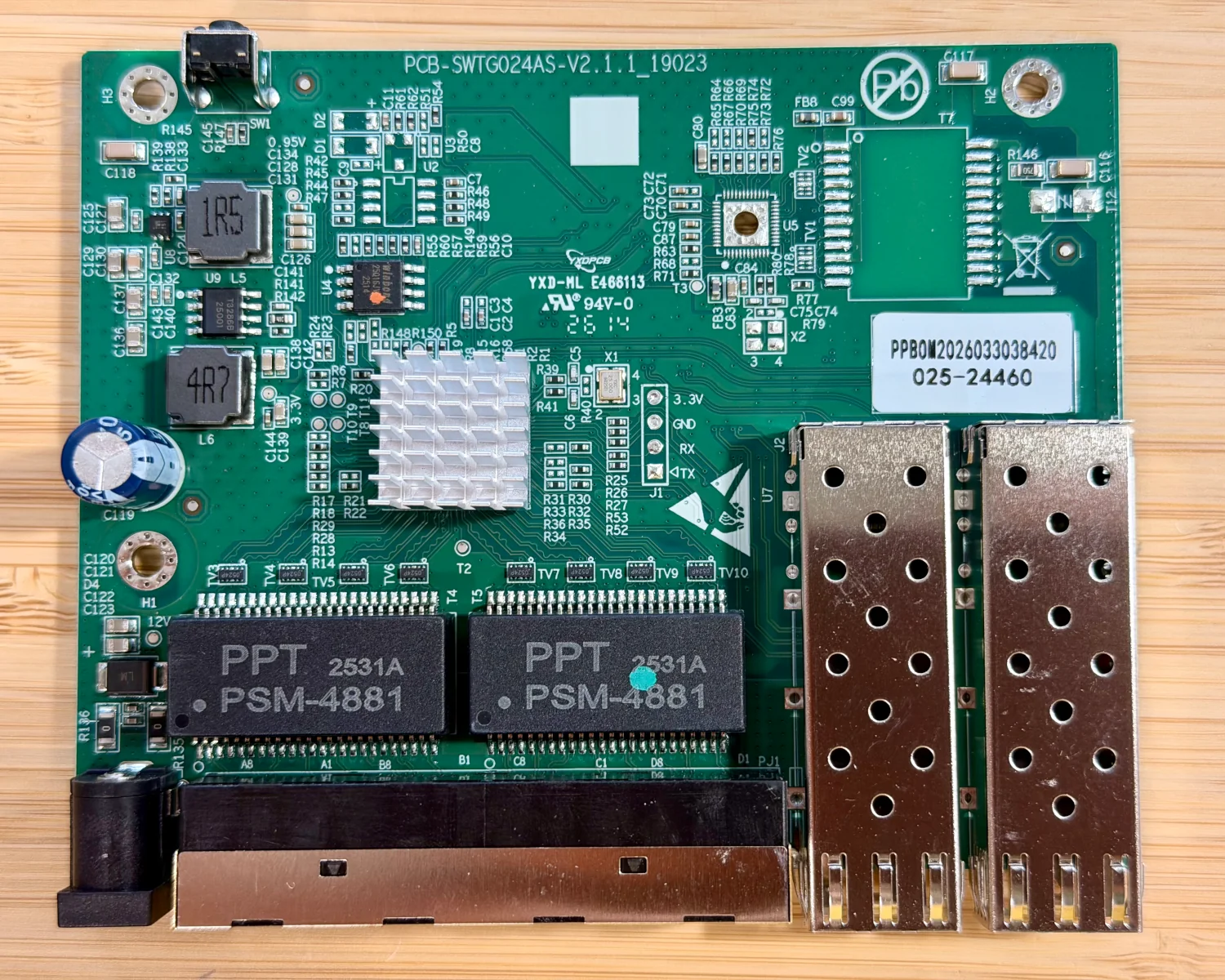
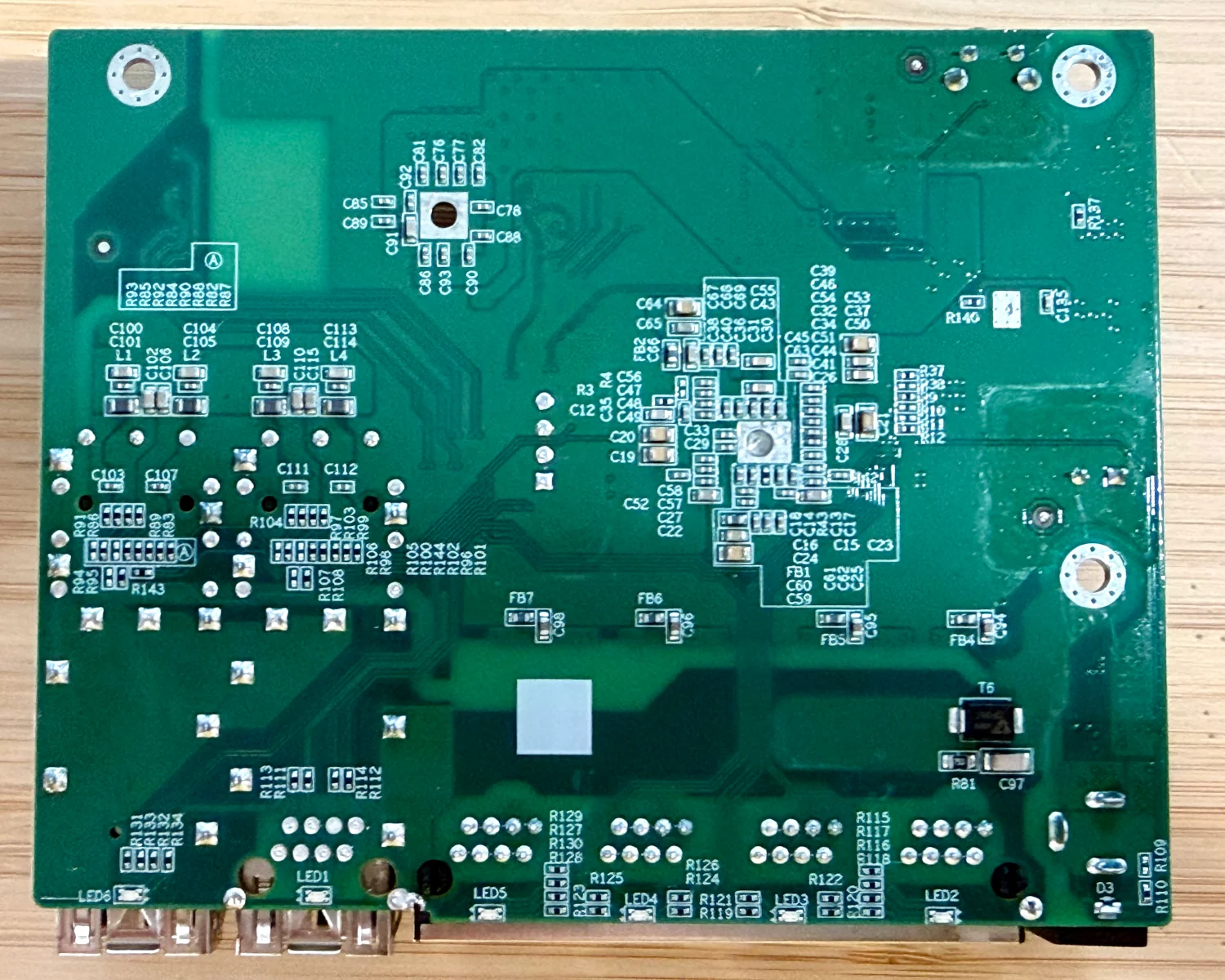
The most remarkable thing about this PCB is how simple it is. There's a significant amount of space taken up by the interfaces, but then very little else. Helpfully for us, there's a very obvious 4-pin header smack in the middle of the board with TX, RX, GND, and 3.3V clearly marked. I'm always glad to find a nice, easily accessible UART header.
Apart from the two large chips next to the ethernet ports, which I assume are some kind of PHYs, maybe, there are just three ICs to identify.
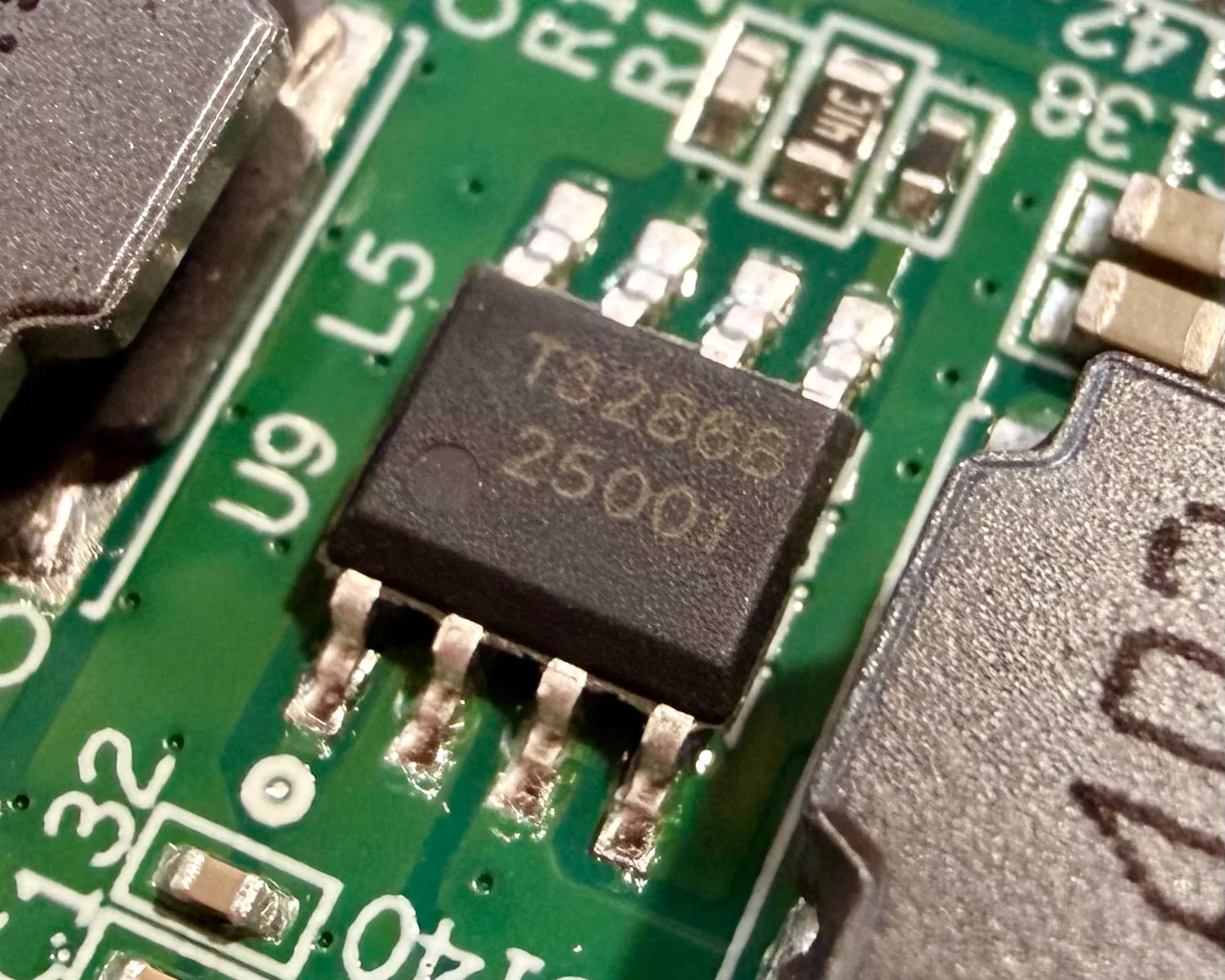
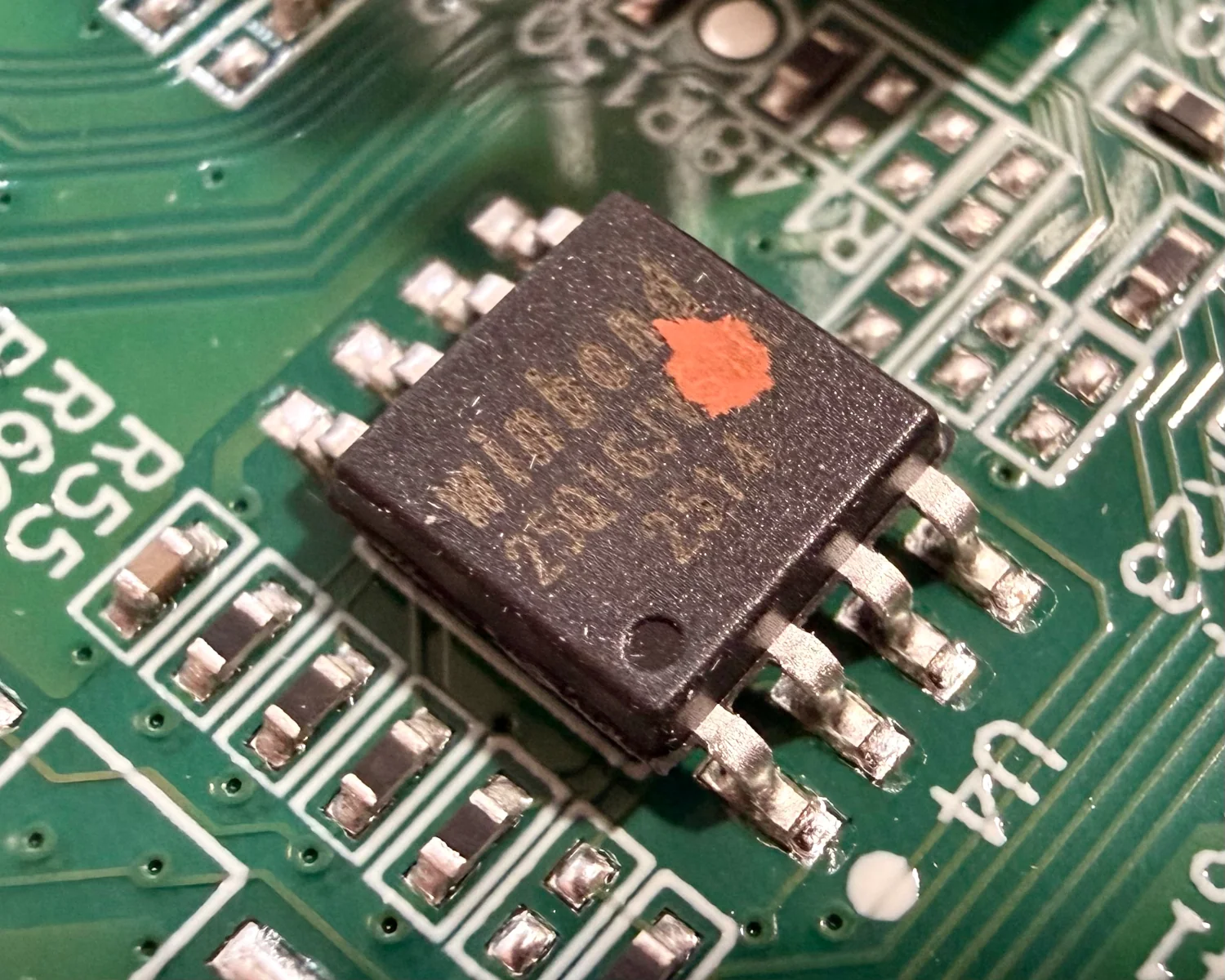
The first is labelled T3286B, which turns out to be the TMI3286B from Toll Semi or (Toul Microelectronics). This is part of the power supply, probably stepping the 12 v input down to the 3.3 v used by the rest of the board. The second small chip is a Winbond 25Q SPI flash, which is likely where we'll find the switch's firmware.
The final chip is hidden under a heat sink. With some heating, a little bit of solvents, and a lot of wiggling, it's possible to remove the heat sink and reveal the chip underneath.
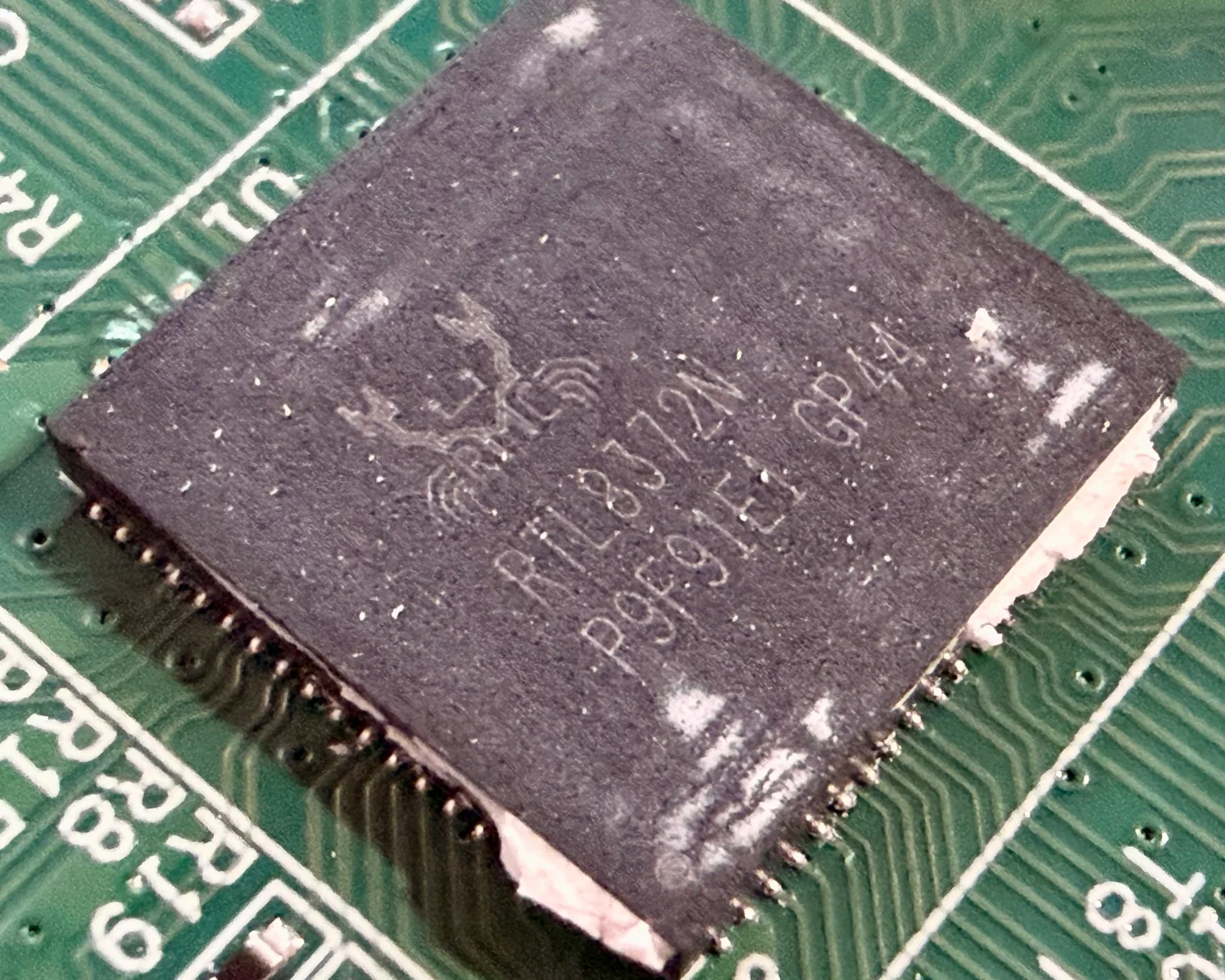
This is a Realtek RTL-8372N, and is pretty much the whole "switch" on a single chip. Reading through the datasheet, it's hard to gleam any specific details about the "management" aspect of this SOC, but there are two references to an MCU and diagrams linking that to a "Management Interface" and "Control Registers". There are no more details about architectures or instruction sets, so I guess reverse engineering the firmware will be the best way to find out what's going on inside the chip itself.
That's about all I can tell from visually inspecting the board. It's time to bring out some of my toys and start sniffing the UART traffic and dumping that flash chip.
2026-08-17